What Is Food Poisoning?
Food poisoning is a foodborne illness caused by consuming contaminated food or water containing harmful bacteria, viruses, parasites, or toxins. It is a common digestive health problem that can affect people of all age groups.
It usually occurs when food is improperly prepared, stored, or handled. Symptoms may develop within a few hours or take several days, depending on the type of contamination.
Although most cases of food poisoning are mild and resolve within a few days, some infections can cause severe dehydration and other complications. Timely diagnosis and appropriate medical treatment are essential for a safe recovery.
Food Poisoning Symptoms
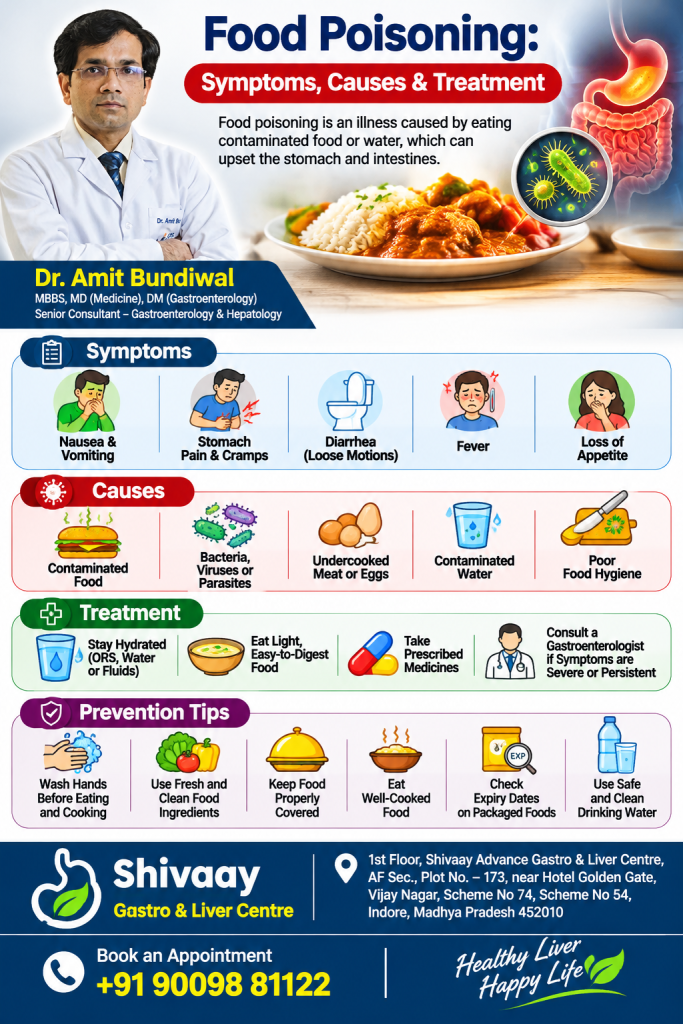
The symptoms of food poisoning can vary depending on the microorganism responsible for the infection and the amount of contaminated food consumed. Common symptoms include:
- Nausea and Vomiting: Feeling sick and repeatedly vomiting after consuming contaminated food.
- Diarrhoea: Frequent loose or watery stools, sometimes accompanied by abdominal discomfort.
- Abdominal Pain and Cramps: Stomach pain caused by inflammation or irritation of the digestive tract.
- Fever: An increase in body temperature, particularly in bacterial infections.
- Weakness and Fatigue: Loss of fluids and essential electrolytes can cause tiredness and weakness.
- Loss of Appetite: Digestive discomfort may reduce the desire to eat.
- Dehydration: Excessive vomiting and diarrhoea can lead to dry mouth, reduced urination, dizziness, and extreme thirst.
Seek medical attention if symptoms are severe, diarrhoea lasts more than three days, there is blood in the stool, fever is high, or signs of dehydration develop.
Food Poisoning Causes
Food poisoning generally occurs due to the consumption of contaminated food or water. Some of its common causes include:
- Bacterial Contamination: Bacteria such as Salmonella, E. coli, Campylobacter, and Listeria can contaminate food and cause infections.
- Viral Infections: Norovirus and other viruses can spread through contaminated food, water, or poor hygiene.
- Improper Food Storage: Keeping cooked food at unsafe temperatures can encourage harmful microorganisms to multiply.
- Undercooked Food: Eating insufficiently cooked meat, poultry, seafood, or eggs increases the risk of infection.
- Contaminated Water: Drinking unsafe water or using it to prepare food can introduce harmful pathogens.
- Poor Food Hygiene: Unwashed hands, dirty utensils, and cross-contamination between raw and cooked foods can contribute to foodborne illnesses.
Maintaining proper food hygiene, washing fruits and vegetables, and cooking food thoroughly can significantly reduce the risk.
Food Poisoning Treatment in Indore
Food poisoning treatment focuses on controlling symptoms, preventing dehydration, and treating the underlying infection when necessary. The treatment depends on the severity of the condition and its underlying cause.
At Shivaay Advance Gastro & Liver Centre, Indore, patients can consult Dr. Amit Bundiwal for professional evaluation and digestive health care.
Common treatment approaches include:
- Oral Rehydration Solution (ORS): Replacing lost fluids and electrolytes is the most important step in managing dehydration.
- Fluid Replacement: Patients with severe dehydration may require intravenous (IV) fluids under medical supervision.
- Medications: Doctors may prescribe suitable medicines to manage specific symptoms. Antibiotics are recommended only for selected bacterial infections and are not required in most cases.
- Dietary Management: Eating easily digestible foods, such as rice, bananas, toast, and light meals, may help during recovery.
- Medical Monitoring: Severe or persistent symptoms may require stool tests, blood investigations, and further evaluation to identify the cause.
Avoid self-medication, particularly antibiotics and anti-diarrhoeal medicines, without consulting a doctor.
For expert consultation regarding food poisoning and other digestive problems, visit Shivaay Advance Gastro & Liver Centre, Indore.
CONCLUSION
Food poisoning is a common digestive condition that can cause nausea, vomiting, diarrhoea, abdominal cramps, and dehydration. While mild cases often improve with proper hydration and rest, severe or persistent symptoms should never be ignored.
Dr. Amit Bundiwal, at Shivaay Advance Gastro & Liver Centre, Indore, provides professional consultation and comprehensive care for various gastrointestinal and liver-related conditions.
With a focus on accurate diagnosis and appropriate treatment, the centre aims to help patients manage digestive health problems effectively.
If you experience symptoms of food poisoning, timely consultation with an experienced gastroenterologist can help prevent complications and support a healthy recovery.
FAQs: What is Food Poisoning: Symptoms, Causes and Treatment
Q.1. What is food poisoning?
Ans. Food poisoning is an illness caused by consuming food or water contaminated with harmful bacteria, viruses, parasites, or toxins. It can affect the digestive system and cause symptoms such as vomiting, diarrhoea, stomach pain, and fever.
Q.2. What are the common symptoms of food poisoning?
Ans. Common symptoms include:
* Nausea and vomiting.
* Diarrhoea or loose motions.
* Stomach pain and cramps.
* Fever.
* Weakness and headache.
* Loss of appetite.
Q.3. What are the main causes of food poisoning?
Ans. Food poisoning can occur due to contaminated food or water, undercooked meat, improperly stored food, unwashed fruits and vegetables, poor food hygiene, and harmful microorganisms.
Q.4. How soon do food poisoning symptoms appear after eating?
Ans. Symptoms may begin within a few hours or take several days to appear. The timing depends on the bacteria, virus, parasite, or toxin responsible for the illness.
Q.5. Which foods commonly cause food poisoning?
Ans. Common sources include undercooked meat, raw or undercooked eggs, contaminated dairy products, improperly stored cooked food, unwashed vegetables and fruits, and contaminated drinking water.
Q.6. How long does food poisoning usually last?
Ans. Most mild cases improve within a few days and generally resolve within a week. However, some infections can last longer and may require medical attention.
Q.7. What is the best treatment for food poisoning?
Ans. Treatment mainly focuses on replacing lost fluids and electrolytes to prevent dehydration. Depending on the cause and severity, a doctor may recommend additional medicines or specific treatment.
Q.8. What should you eat and drink during food poisoning?
Ans. Drink enough fluids and consider ORS to replace lost fluids and salts, especially if you have diarrhoea or vomiting. Eat small portions of food as tolerated. Avoid foods that worsen your symptoms.
Q.9. Can food poisoning cause dehydration?
Ans. Yes. Frequent vomiting and diarrhoea can cause significant fluid loss. Signs include excessive thirst, dry mouth, dark urine, reduced urination, dizziness, and weakness.
Q.10. When is food poisoning considered serious?
Ans. Food poisoning may be serious if it causes severe dehydration, bloody diarrhoea, high fever, persistent vomiting, severe abdominal pain, or neurological symptoms. Such symptoms need prompt medical attention.
Q.11. Which doctor should you consult for food poisoning in Indore?
Ans. For food poisoning accompanied by persistent diarrhoea, vomiting, abdominal pain, or other digestive problems, you can consult Dr. Amit Bundiwal, Senior Consultant in Gastroenterology & Hepatology and Founder & Director of Shivaay Gastro & Liver Centre, Indore.